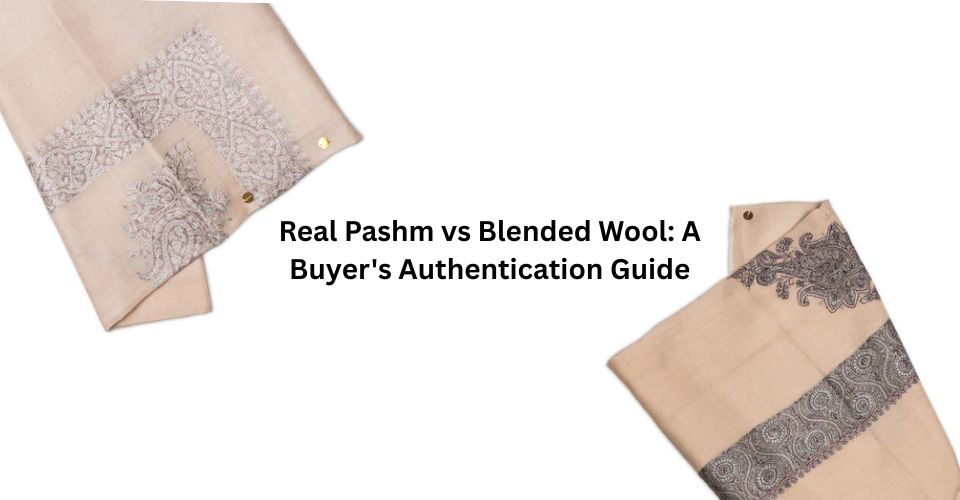
Real Pashm vs Blended Wool: A Buyer's Authentication Guide
Pashmina is valued for its softness, warmth, and lightweight feel. However, not every fabric sold under the name pashmina is made from pure pashm. Some products use wool blends or other fibers that can have a similar appearance while offering a different texture, warmth, and price point.
For shoppers, knowing how to distinguish real pashm from blended wool can make it easier to choose a product that matches their expectations. The goal is not always to find the most expensive option. It is to understand what the fabric actually contains and what you are buying.
What Is Real Pashm?
Pashm refers to the fine undercoat fiber traditionally obtained from certain breeds of cashmere goats. The fiber is collected from the soft underlayer of the animal's coat and processed into fine yarn.
Because the fibers are naturally fine, genuine pashm can feel exceptionally soft without being heavy. It is also valued for its insulating properties.
However, the word "pashmina" can be used broadly in retail. A product described as pashmina may contain pure cashmere, a cashmere blend, wool, or synthetic fibers. Checking the product description and fiber composition is therefore important.
What Is Blended Wool?
Blended wool combines wool with another fiber. The additional material may be cashmere, silk, cotton, polyester, viscose, or another textile fiber.
Blending can serve several purposes. It may change the fabric's durability, texture, drape, cost, or care requirements.
A wool blend is not necessarily a poor-quality product. It simply has different characteristics from a piece made entirely from fine pashm.
Understanding this distinction can help shoppers avoid comparing two completely different fabrics as though they were identical.
Check the Fiber Composition First
The most reliable starting point is the product's stated composition.
Look for information such as:
-
100% cashmere
-
Cashmere and wool blend
-
Wool and silk blend
-
Wool with synthetic fibers
-
Viscose or polyester blend
A detailed product description should provide enough information to understand what the textile contains.
If the composition is unclear, ask the seller before purchasing. A transparent description is much more useful than relying solely on terms such as "luxury," "premium," or "pashmina."
Feel the Fabric
Texture can provide useful clues, but touch alone cannot authenticate a fiber with complete certainty.
Fine pashm generally feels soft and smooth against the skin. It should not feel excessively rough or scratchy.
Blended wool can vary considerably depending on the type and percentage of fibers used. Some blends may feel very soft, while others may have a more noticeable wool texture.
When shopping in person, compare several textiles rather than judging one piece in isolation.
Look at the Weave and Finish
The construction of a shawl or scarf can also provide information about its quality.
Examine the fabric under good lighting. Look for:
-
Consistent weaving
-
Even edges
-
Secure finishing
-
Uniform texture
-
No obvious loose threads
-
Consistent density throughout the piece
A high-quality textile should have a well-finished appearance. However, construction quality alone does not prove that a fabric is made from pure pashm.
Be Careful With the Burn Test
A common online suggestion for identifying natural fibers is to perform a burn test. This is not recommended for shoppers.
Burning a textile can damage the product and may create smoke or fumes that should not be inhaled. It is also not a practical method for evaluating a finished scarf or shawl.
Instead, rely on the manufacturer's fiber information and, when necessary, professional textile testing.
Price Can Be a Clue, Not Proof
Price may provide some context, but it should never be treated as authentication.
Fine natural fibers can be expensive because of their sourcing, processing, and production methods. However, a high price does not automatically prove that a product contains pure pashm.
Likewise, a lower-priced wool blend may be intentionally designed as a more accessible alternative.
Compare the price with the stated fiber composition, construction, size, craftsmanship, and brand information.
Why Blends Can Still Be a Good Choice
A blended fabric can offer practical advantages. Depending on its composition, a blend may provide greater durability, a different drape, easier maintenance, or a particular texture.
For everyday use, some shoppers may actually prefer a blend over a delicate luxury fiber.
The important point is to know what you are buying. A blend should be presented as a blend rather than being misleadingly described as pure pashm.
Consider How You Plan to Wear It
Your intended use can also guide your choice.
If you want a lightweight luxury accessory for special occasions, you may prioritize fine natural fibers and craftsmanship.
If you want something for frequent everyday use, durability and easier care may matter more.
For shoppers looking for a pashmina online shop Doha, reviewing fabric information before ordering is particularly important because you may not be able to physically touch the textile before purchase.
What to Check When Buying Online
Online shopping requires a little more attention because photographs cannot fully communicate fabric texture.
Before placing an order, check:
-
Fiber composition
-
Product dimensions
-
Fabric description
-
Care instructions
-
Close-up product photographs
-
Available colours and patterns
-
Return or exchange information
-
Seller or brand information
If the listing only uses broad marketing terms without explaining the material, consider asking for clarification.
Ask the Right Questions
A reputable seller should be able to provide basic information about the textile.
Useful questions include:
-
What fibers are used in this product?
-
Is it pure pashm or a blend?
-
Where is the fabric sourced?
-
How should it be washed or stored?
-
Is the product handwoven or machine-made?
-
What are the exact dimensions?
-
Does the product have a blend percentage?
The answers can help you make a more informed decision.
Choosing a Boutique With Clear Product Information
A good shopping experience starts with transparency. Whether you are looking for a scarf, shawl, clothing item, or another textile accessory, the product description should make the material clear.
A Boutique Store Doha can offer a convenient way to compare wearable pieces, but shoppers should still review the individual product details rather than assuming that every item labelled pashmina has the same fiber composition.
Ardora offers wearable fashion pieces for shoppers looking for refined accessories and clothing options in Doha. Reviewing the material, construction, and care information can help you select a piece that suits your wardrobe and intended use.
Make Your Purchase Based on Facts
Real pashm and blended wool can both have a place in a modern wardrobe. The key difference is understanding their composition and characteristics.
Do not rely on softness, price, or appearance alone to authenticate a textile. Start with the stated fiber composition, review the product details, inspect the construction, and ask questions when information is missing.
For online shoppers, clear product descriptions are especially valuable. They allow you to compare materials before making a purchase and choose a textile based on what it actually contains rather than relying on assumptions.
When selecting your next scarf or shawl, take the time to check the fiber content and care requirements. A little research can help ensure that the product you receive matches what you expected when you placed the order.